
Introduction
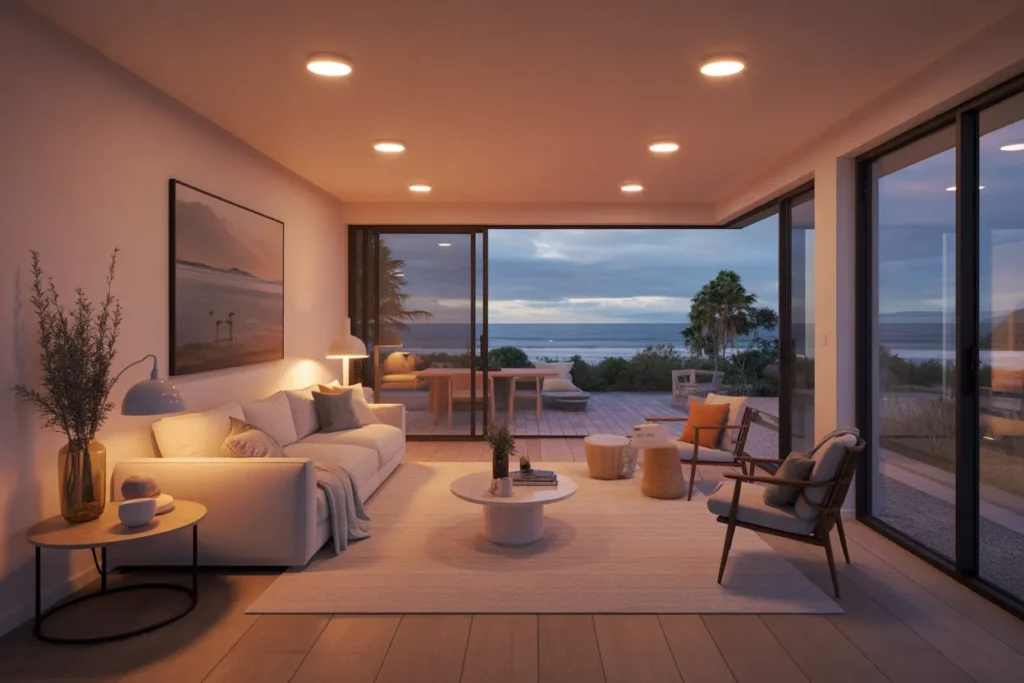
Lighting accounts for approximately 10-15% of the average New Zealand household’s electricity consumption – a significant portion of your power bill that many Paraparaumu homeowners accept without question. Traditional incandescent and halogen bulbs waste enormous amounts of energy converting electricity into heat rather than light, whilst requiring frequent replacement that adds ongoing costs and inconvenience. LED technology revolutionises home lighting, delivering the same brightness using up to 85% less electricity whilst lasting 15-25 times longer than conventional bulbs.
For Kapiti Coast residents facing rising electricity costs – currently averaging 33-39 cents per kilowatt-hour across the Wellington region – upgrading to LED lighting represents one of the most cost-effective home improvements available. Each bulb replaced can save $100-$300 over its lifetime through reduced energy consumption and elimination of frequent replacements. Beyond immediate financial benefits, modern LED systems offer unprecedented flexibility, allowing homeowners to personalise lighting with dimming capabilities, adjustable colour temperatures, and even RGB colour-changing options providing access to over 16 million colour combinations.
Understanding the comprehensive benefits of LED lighting – from dramatic energy savings to enhanced longevity and creative lighting possibilities – empowers informed decisions about upgrading your Paraparaumu home’s lighting system.
Key Takeaways
LED bulbs use up to 85% less electricity than traditional incandescent or halogen lighting
Each LED bulb saves $100-$300 over its lifetime through reduced energy consumption
LEDs last 15-25 years with typical household use, eliminating frequent bulb replacements
Modern LEDs produce minimal heat compared to incandescent bulbs, improving safety and comfort
Dimmable LED options provide precise light control without compromising energy efficiency
RGB LED systems offer over 16 million colour combinations for personalised mood lighting
LED technology qualifies as one of New Zealand’s most cost-effective energy efficiency improvements
Professional installation ensures optimal performance and compliance with electrical standards
Upgrading to LEDs reduces household greenhouse gas emissions significantly
Compatible with existing light fittings in most Kapiti Coast homes
Immediate electricity bill reduction from the first month following installation
Ideal timing for upgrades during home renovations or property improvements
Benefit 1: Dramatic Energy Efficiency and Cost Savings
The primary advantage of LED lighting lies in exceptional energy efficiency, converting substantially more electrical energy into visible light rather than wasted heat. This fundamental efficiency difference translates directly into reduced electricity consumption and lower power bills for Paraparaumu homeowners.
Understanding Energy Consumption Differences
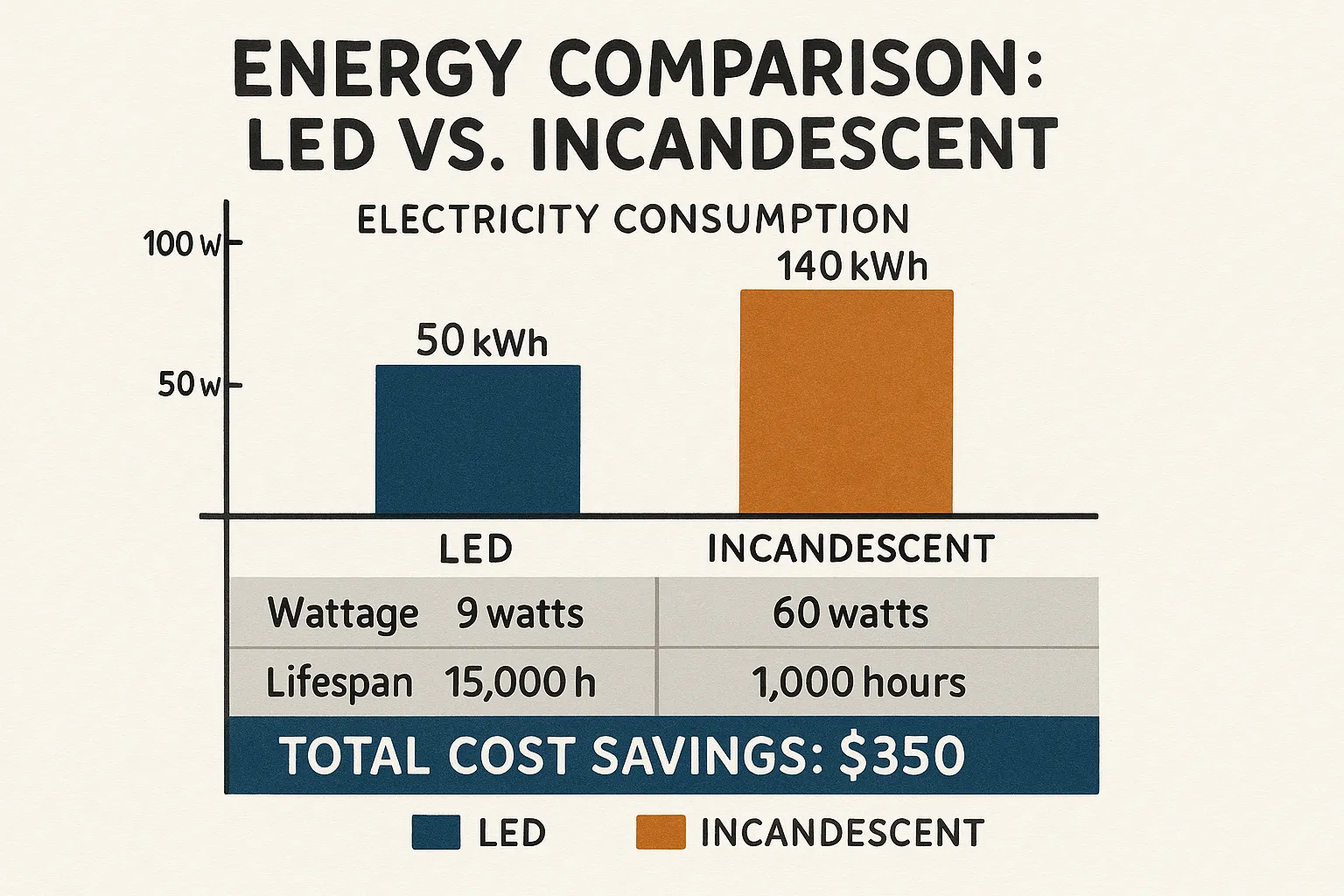
Traditional incandescent bulbs waste approximately 90% of consumed energy as heat, using only 10% to produce visible light. This inherent inefficiency means households pay to heat their homes unnecessarily whilst simultaneously paying for lighting. LED technology inverts this ratio, converting approximately 95% of electrical energy into light with minimal heat generation.
In practical terms, a traditional 60-watt incandescent bulb provides similar brightness to an 8-10 watt LED bulb. For lighting operating 5 hours daily, this represents 250 watts versus 40-50 watts of daily consumption—a reduction of 200+ watts per bulb. Across multiple bulbs throughout a home, these individual savings compound substantially.
Calculating Real-World Savings
Using current Wellington region electricity costs averaging 35 cents per kilowatt-hour, the energy savings become financially significant. A single 60-watt incandescent bulb operating 5 hours daily consumes approximately 109 kilowatt-hours annually, costing around $38 per year. The equivalent LED bulb consuming 10 watts uses only 18 kilowatt-hours annually, costing approximately $6.30 per year—saving $31.70 annually per bulb.
For a typical Kapiti Coast home with 20-30 light fittings, complete LED conversion could reduce lighting costs by $600-$900 annually. These aren’t theoretical savings—they appear immediately in reduced electricity bills from the first month following installation.
Long-Term Financial Benefits
EECA research confirms that each incandescent bulb replaced with an LED saves $100-$300 over the LED’s lifetime, depending on usage patterns and electricity costs. For homes undertaking complete lighting upgrades, total lifetime savings easily reach thousands of dollars—substantial returns on modest initial investment in LED technology.
Professional electrical installation ensures optimal energy efficiency through correct bulb selection, proper fixture compatibility, and appropriate placement maximising both light quality and energy savings.
Benefit 2: Exceptional Longevity and Reduced Maintenance
Beyond energy efficiency, LED longevity dramatically reduces the hassle and expense of frequent bulb replacements that characterise traditional lighting systems.
LED Lifespan Versus Traditional Bulbs
Quality LED bulbs typically last 15,000-50,000 hours depending on specification and usage patterns. At average household usage of 3-5 hours daily, this translates to 15-25 years of service life. In contrast, traditional incandescent bulbs last approximately 1,000 hours—roughly one year under similar usage. Even compact fluorescent bulbs (CFLs), marketed as “long-life” alternatives, typically last only 8,000-15,000 hours.
This dramatic lifespan difference means LED bulbs installed today in your Paraparaumu home will likely still function when children currently in primary school graduate university. For hard-to-reach fixtures—ceiling lights, outdoor installations, or high stairwells—this longevity proves particularly valuable, eliminating dangerous ladder work and inconvenience associated with frequent replacements.
Reduced Replacement Costs
Whilst LED bulbs cost slightly more initially than incandescent alternatives—typically $5-15 per bulb compared to $1-3 for incandescent—the dramatic lifespan difference makes LEDs substantially cheaper long-term. Over 25 years, a single LED bulb costing $10 replaces approximately 25 incandescent bulbs at $2 each—saving $40 in bulb costs alone before accounting for energy savings.
Maintenance Time Savings
Professional electricians recognise that replacement labour often exceeds bulb costs for commercial properties. Homeowners similarly value time savings—not tracking which bulbs need replacement, not purchasing bulbs regularly, not climbing ladders, not dealing with the inconvenience of failed lighting during dinner parties or whilst working from home.
For rental property owners throughout the Kapiti Coast, LED longevity dramatically reduces maintenance callouts whilst providing reliable lighting for tenants. This reliability protects property values whilst reducing ongoing management costs.
Benefit 3: Versatile Dimming and Colour Temperature Control
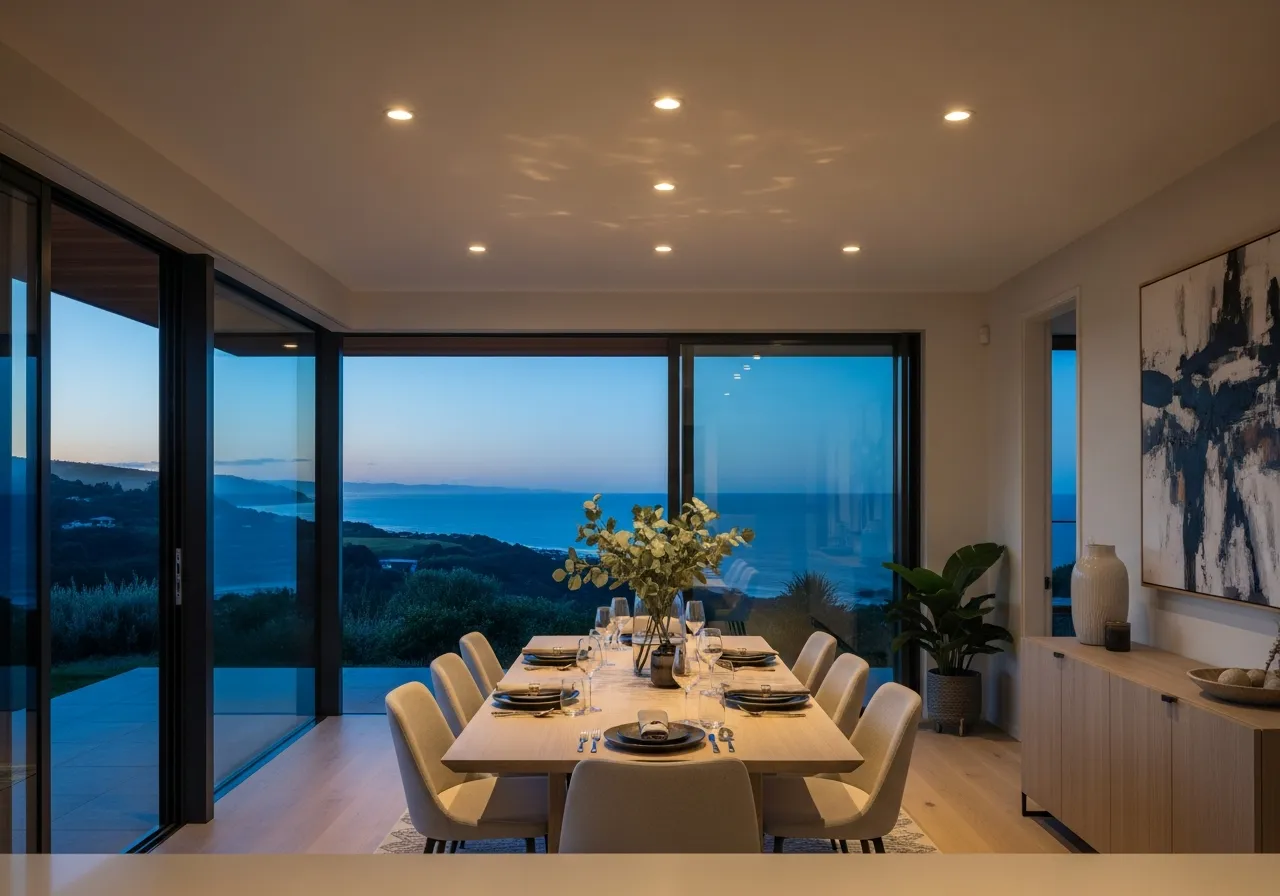
Modern LED technology offers unprecedented lighting control, enabling homeowners to adjust both brightness and colour temperature to suit different activities, times of day, and personal preferences.
Dimmable LED Capabilities
Unlike traditional incandescent bulbs that change colour temperature when dimmed (becoming yellower at lower settings), quality LED bulbs maintain consistent colour whilst dimming smoothly from full brightness to subtle ambient levels. This capability allows single fixtures to serve multiple purposes—bright task lighting for reading or cooking, medium levels for general activities, and low settings for relaxed evening ambience.
Professional installation ensures dimmer switches are LED-compatible, avoiding the flickering or buzzing that can occur with inappropriate dimmer-LED combinations. Whittaker Electrical specifies appropriate components ensuring smooth, reliable dimming performance throughout your Kapiti home.
Adjustable Colour Temperature Options
Some LED bulbs offer adjustable colour temperature—shifting from warm yellowish light (2700K-3000K) reminiscent of traditional incandescent bulbs, through neutral white (4000K-4500K) suitable for kitchens and workspaces, to cool daylight tones (5000K-6500K) providing crisp illumination for detailed tasks.
This adjustability allows optimising lighting for specific rooms or activities without installing multiple fixture types. Morning routines might benefit from energising cool white light, whilst evening relaxation suits warmer tones promoting comfort and sleep preparation.
Circadian Rhythm Considerations
Research increasingly demonstrates lighting’s impact on circadian rhythms—the body’s natural sleep-wake cycle. Cool-toned light suppresses melatonin production, promoting alertness, whilst warm tones support natural melatonin release facilitating sleep. Adjustable LED systems allow homeowners to align lighting with circadian health, using cooler tones during daytime and warmer evening lighting supporting healthy sleep patterns.
Benefit 4: Creative RGB Colour Options and Mood Lighting

For homeowners seeking creative lighting possibilities, RGB LED technology delivers over 16 million colour combinations, transforming ordinary rooms into personalised spaces reflecting individual style and mood preferences.
Understanding RGB LED Systems
RGB (Red, Green, Blue) LED systems combine these three primary colours in varying intensities, creating virtually unlimited colour combinations. Controlled through dedicated controllers, smartphone apps, or integrated smart home systems, RGB LEDs allow instant lighting transformation from subtle pastels to vibrant saturated colours.
These systems excel in entertainment spaces, children’s rooms, outdoor entertaining areas, and anywhere homeowners desire flexible, dramatic lighting effects. Special occasions—parties, holidays, sporting events—become opportunities for themed lighting matching the celebration.
Practical Applications
Beyond novelty value, RGB lighting serves practical purposes. Reading nooks might use focused task lighting during use, shifting to gentle amber when relaxing. Home theatres benefit from subtle backlighting reducing eye strain without creating screen glare. Children’s rooms can transition from bright playtime lighting to calming bedtime colours supporting healthy sleep routines.
Outdoor entertaining areas throughout the Kapiti Coast particularly benefit from RGB capability—summer barbecues under warm festive lighting, elegant dinner parties with sophisticated colour schemes, or vibrant celebrations with bold, energetic hues.
Preset and Programmable Scenes
Modern RGB controllers allow saving favourite colour combinations and brightness levels as presets, enabling instant recall without manual adjustment. Some systems support scheduled programming—automatically adjusting lighting throughout the day, or creating security-oriented random patterns when homes are unoccupied.
Professional installation ensures RGB systems integrate properly with existing electrical infrastructure, avoiding the frustration of complicated DIY installations or incompatible components.
Benefit 5: Enhanced Safety and Reduced Heat Output
Traditional incandescent bulbs generate substantial heat during operation—hot enough to cause burns on contact and, under certain conditions, ignite nearby combustible materials. LED technology dramatically reduces these thermal risks.
Lower Operating Temperatures
LED bulbs remain cool to touch even after hours of operation, eliminating burn risks particularly important for homes with young children. This reduced temperature also means safer installation in enclosed fixtures, recessed ceiling lights, and proximity to heat-sensitive materials without the fire risks associated with traditional bulbs.
For Kapiti Coast properties, reduced heat generation improves summer comfort, particularly in rooms with multiple lights. Traditional bulbs essentially function as small heaters—unwanted thermal gain during warm weather that air conditioning systems must counteract.
Insulation Compatibility
Unlike halogen downlights requiring clearance from ceiling insulation due to fire risks, most LED downlights can be installed in direct contact with insulation. This allows proper insulation coverage improving overall home energy efficiency whilst maintaining safe lighting installation.
Professional electricians ensure LED installations comply with New Zealand electrical standards, particularly regarding insulation contact and fire safety requirements outlined in AS/NZS 3000.
Why Choose Whittaker Electrical for Your LED Lighting Upgrade
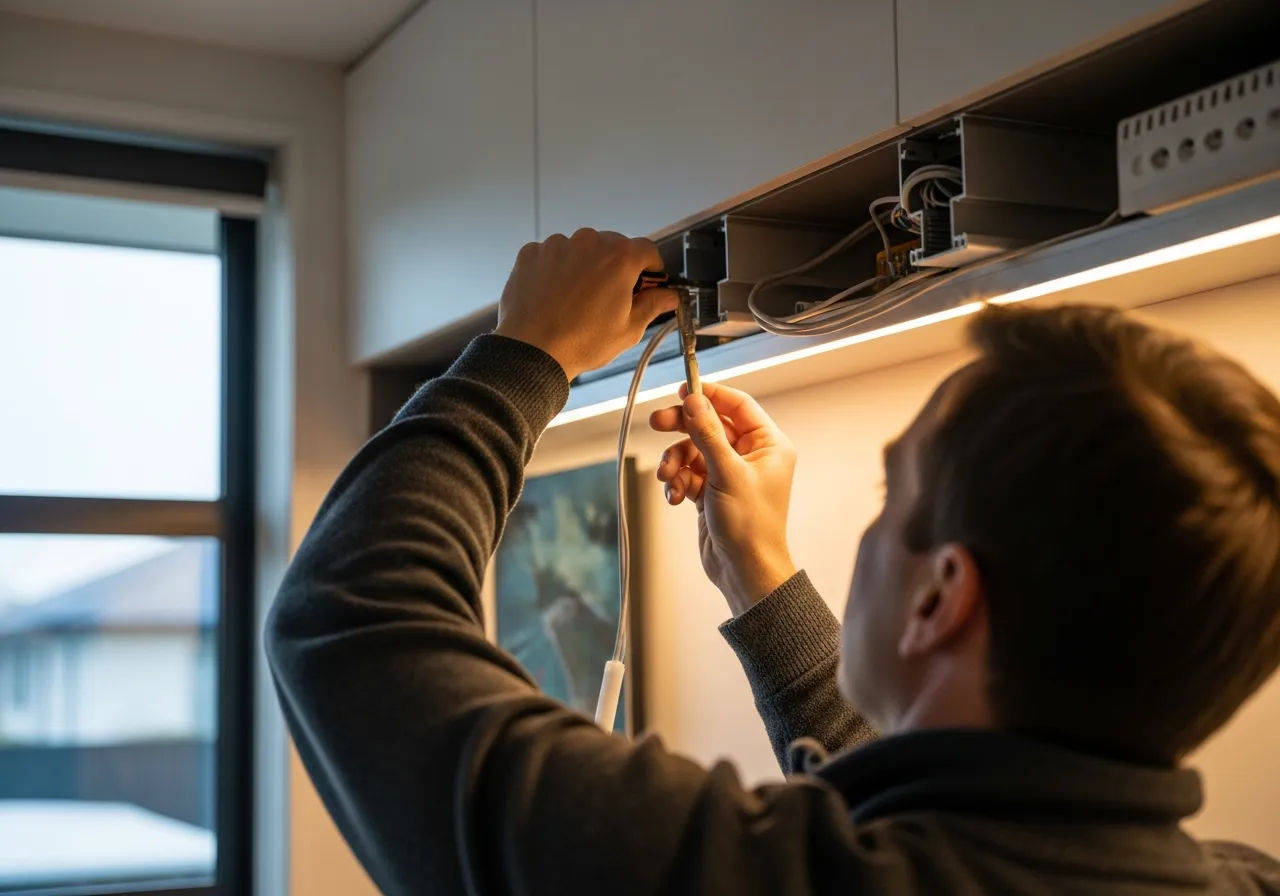
Whittaker Electrical provides comprehensive LED lighting installation services throughout Paraparaumu and the Kapiti Coast, combining qualified expertise with commitment to delivering lasting value for homeowners.
Professional Assessment and Planning
Our licensed electricians assess your property’s existing lighting, identifying opportunities for LED upgrades that maximise energy savings whilst improving light quality. This includes evaluating fixture compatibility, electrical load considerations, and opportunities for enhanced functionality through dimmers, smart controls, or creative lighting placement.
Quality LED Products
Whittaker Electrical supplies LED bulbs and fixtures from reputable manufacturers, ensuring reliable performance and genuine longevity. We avoid cheap imports that fail prematurely, instead specifying products delivering the energy savings and extended lifespan that make LED upgrades worthwhile investments.
Kapiti Coast Expertise
Operating throughout the Kapiti Coast since establishing our business, we understand local housing stock, typical electrical installations, and environmental factors affecting lighting performance. This knowledge ensures recommendations suited to coastal conditions and compatible with region-specific electrical infrastructure.
Comprehensive Installation Services
Beyond simple bulb replacement, we provide complete lighting solutions including new fixture installation, smart lighting integration, outdoor LED systems, and switchboard upgrades when necessary to support modern lighting loads. Our installations meet all New Zealand electrical standards, providing safe, compliant systems backed by appropriate certification.
Ongoing Support
Following installation, Whittaker Electrical remains available for any questions, adjustments, or additional work as your lighting needs evolve. We prioritise long-term customer relationships, ensuring you receive responsive service throughout your LED system’s multi-decade lifespan.
Transform Your Kapiti Home with Professional LED Lighting
Stop accepting unnecessarily high electricity bills and frequent bulb replacement hassles. Professional LED lighting upgrades deliver immediate energy savings, enhanced lighting quality, and creative possibilities impossible with traditional bulbs—all whilst dramatically reducing ongoing maintenance requirements.
Whether upgrading individual rooms or converting your entire Paraparaumu home to LED technology, Whittaker Electrical provides expert assessment, quality products, and professional installation ensuring optimal results. From energy-efficient downlights to creative RGB mood lighting, we deliver solutions matching your specific requirements and budget.
The investment in LED lighting pays for itself through reduced electricity costs whilst providing superior lighting performance for decades. Government figures confirm LED upgrades represent amongst the most cost-effective energy improvements New Zealand homeowners can undertake—accessible to all budgets whilst delivering substantial long-term value.
Contact Whittaker Electrical today to discuss your LED lighting upgrade. Our licensed electricians will assess your property, recommend appropriate solutions, and provide transparent pricing for professional installation that transforms your home’s lighting whilst reducing ongoing energy costs.
Call Euan at Whittaker Electrical on 021 975 911 or email hello@whittakerelectrical.co.nz to schedule your LED lighting consultation. Discover how professional LED installation delivers immediate energy savings, enhanced comfort, and creative lighting possibilities for your Kapiti Coast home.

Frequently Asked Questions
How much money will I actually save by switching to LED lighting?
Savings depend on your current lighting setup and usage patterns, but typical Kapiti Coast households save $600-$900 annually in electricity costs after complete LED conversion. Each individual bulb replacement saves approximately $25-$35 per year in reduced energy consumption, with additional savings from eliminated replacement bulb purchases. Over an LED bulb’s 15-25 year lifespan, total savings reach $100-$300 per bulb according to EECA research. For homes with 20-30 light fittings, this accumulates to several thousand dollars in lifetime savings. These aren’t theoretical projections—the savings appear immediately in reduced electricity bills from your first month following LED installation. Professional electricians can provide specific estimates based on your property’s current lighting, usage patterns, and Wellington region electricity costs, helping you understand expected payback periods and long-term value.
Will LEDs work with my existing light fittings and dimmer switches?
Most LED bulbs are designed as direct replacements for traditional bulbs, fitting standard bayonet, screw, and spotlight fittings common in Kapiti Coast homes without any modifications required. However, older dimmer switches designed for incandescent bulbs may not function properly with LED bulbs, causing flickering, buzzing, or limited dimming range. Professional electricians assess your existing switches and fixtures, recommending LED-compatible dimmers where necessary to ensure smooth, reliable performance. The modest cost of dimmer upgrades proves worthwhile for achieving the full benefits of dimmable LED technology. Additionally, some enclosed fixtures or recessed lights may require specific LED bulb types to ensure adequate heat dissipation and prevent premature failure. Whittaker Electrical’s assessment identifies any compatibility concerns, specifying appropriate LED products for your specific fixtures whilst ensuring installations comply with New Zealand electrical standards.
Are expensive “smart” LED bulbs worth the extra cost?
Smart LED bulbs offering Wi-Fi connectivity, voice control, and programmable features cost substantially more than standard LEDs—typically $30-$80 per bulb compared to $5-$15 for quality conventional LEDs. Whether this premium proves worthwhile depends on your specific requirements and interest in home automation. For most Kapiti Coast homeowners, standard dimmable LEDs provide excellent value, delivering energy efficiency and light control without complexity or ongoing connectivity requirements. Smart bulbs excel in specific applications—security lighting with randomised patterns when away, automated circadian-friendly colour temperature adjustment, or integration with comprehensive smart home systems controlling heating, security, and entertainment. Consider starting with standard LEDs throughout most of your home, potentially adding smart bulbs in select locations where programmable features provide genuine utility rather than mere novelty. Professional electricians can demonstrate both options, helping you make informed decisions about where smart technology adds value versus where simpler solutions suffice.
How long does professional LED installation take?
Simple bulb replacement in existing fixtures proceeds quickly, with most homes completed within 1-2 hours depending on property size and bulb quantity. More comprehensive installations involving new fixtures, smart lighting systems, or dimmer switch upgrades require additional time—typically 2-4 hours for average-sized homes. Complex projects incorporating complete home rewiring or extensive architectural lighting installations may require multiple days depending on scope and property size. Professional electricians work efficiently whilst maintaining quality standards and safety compliance. We provide realistic timeframes during quotation, respecting your schedule and minimising disruption to household routines. For investment properties or holiday homes, we coordinate timing around tenancy changeovers or unoccupied periods. Our tidy work practices ensure minimal mess, with thorough cleanup following completion leaving your Paraparaumu home ready to enjoy immediately.
Can I install LED lighting myself or do I need a licensed electrician?
New Zealand electrical regulations permit homeowners to replace bulbs in existing fixtures—straightforward work requiring no electrical qualifications. However, any work involving electrical wiring, new fixture installation, dimmer switch installation or replacement, or modifications to existing electrical systems legally requires a licensed electrician under the Electricity Act. This isn’t bureaucratic obstruction—it’s essential safety protection ensuring work meets standards preventing electrical fires, shocks, and other hazards. Incorrect DIY electrical work creates serious risks whilst potentially invalidating home insurance coverage and complicating future property sales. Professional installation costs prove modest relative to safety benefits and quality assurance provided. Licensed electricians properly assess electrical loads, ensure appropriate wiring and protection, comply with AS/NZS 3000 standards, and provide necessary certification documenting compliant work. For peace of mind and guaranteed safety, professional LED installation through qualified electricians like Whittaker Electrical proves the sensible choice protecting your Kapiti Coast home and family.
Source Links
Energy Efficiency and Conservation Authority (EECA) LED Lighting Guide – https://www.eeca.govt.nz/
Gen Less LED Lighting Information – https://www.genless.govt.nz/
Electricity Authority of New Zealand – https://www.ea.govt.nz/
Standards New Zealand AS/NZS 3000 Electrical Installations – https://www.standards.govt.nz/
Master Electricians New Zealand – https://www.masterelectricians.org.nz/
Electrical Workers Registration Board – https://www.ewrb.govt.nz/
WorkSafe New Zealand Electrical Safety – https://www.worksafe.govt.nz/
Ministry of Business, Innovation and Employment (MBIE) Energy Data – https://www.mbie.govt.nz/
Consumer New Zealand Home Energy Guide – https://www.consumer.org.nz/
Building Performance Energy Efficiency Standards – https://www.building.govt.nz/
Whittaker Electrical Ltd provides professional LED lighting installation services throughout Paraparaumu and Kapiti Coast. Our licensed Master Electricians deliver expert lighting solutions reducing energy costs whilst enhancing home comfort and functionality. Quality Electrical Work, Friendly Professional Service.